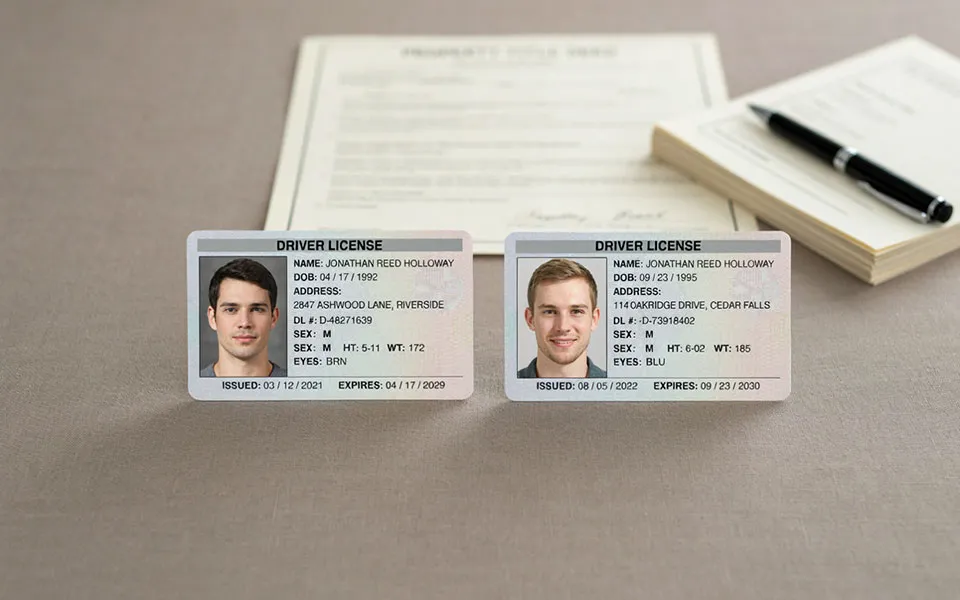
Why it Happens
When someone loses a lawsuit or owes a court-ordered debt, the person they owe can record the judgment with the county. In Utah, a recorded judgment can become a lien on real property the debtor owns in that county, including property they buy later (Utah Code 78B-5-202).
Judgments are indexed by the debtor's name, not by a property address. So when your title company searches for liens that could affect your home, it has to search your name, and every judgment recorded against anyone with that name or a close variation comes up.
If your name is John Smith, Maria Garcia, or David Jensen, you can imagine how many results that brings. Middle initials, nicknames, and misspellings widen the net even further.
A name match isn't a lien on your home. It's a question your title company needs to answer before closing.
Utah law requires the person recording a judgment to include identifying details about the debtor (Utah Code 78B-5-201). Those details are often what make it possible to show a judgment belongs to someone else.
How Your Title Company Sorts It Out
When a judgment matches your name, the title company compares what's in the court and recorder records with information about you. If the details don't match, the judgment can be ruled out.
You'll usually be asked to fill out a short identity form, sometimes called a statement of information or name affidavit. It typically asks for:
- Your full legal name and any other names you've used
- Your date of birth
- Past addresses going back several years
- Your employment history
- Your spouse's name, if you're married
A different birth date, a different city, or an address history that never overlaps with the judgment debtor's is often enough to show the judgment belongs to someone else. You sign the form confirming the judgment isn't yours, and the title company can then insure without it.
This information is used only to tell you apart from other people with your name. It's a routine step, and it protects you as well as the buyer and lender.
If the Judgment is Actually Yours
Sometimes the search turns up an old judgment that really is yours: a medical bill, a credit card debt, or a case you thought was settled. In that case, it generally needs to be paid or resolved at or before closing. If you already paid it, the creditor may simply never have recorded a release.
Your title company can request a payoff amount from the creditor and pay it from your sale proceeds at closing. If you have proof the debt was already satisfied, share it right away so the release can be obtained and recorded.
How to Avoid Delays
- Return the identity form quickly. It's often the only thing standing between a name match and a clear title.
- Be complete. List every name you've used, including maiden names and name changes.
- Mention old judgments up front. If you know about one, tell your title company early so there's time to resolve it.
- Keep records of paid debts. A satisfaction letter or final statement can save days of back-and-forth.
A name match can feel alarming, but it's usually resolved with one form and a little patience. If you have questions about something that turned up in your title search, contact Access Title, and we'll walk you through it.
Sources
- Utah Code 78B-5-201: Judgment recorded in Registry of Judgments — Utah Legislature
- Utah Code 78B-5-202: Judgment as a lien upon real property — Utah Legislature