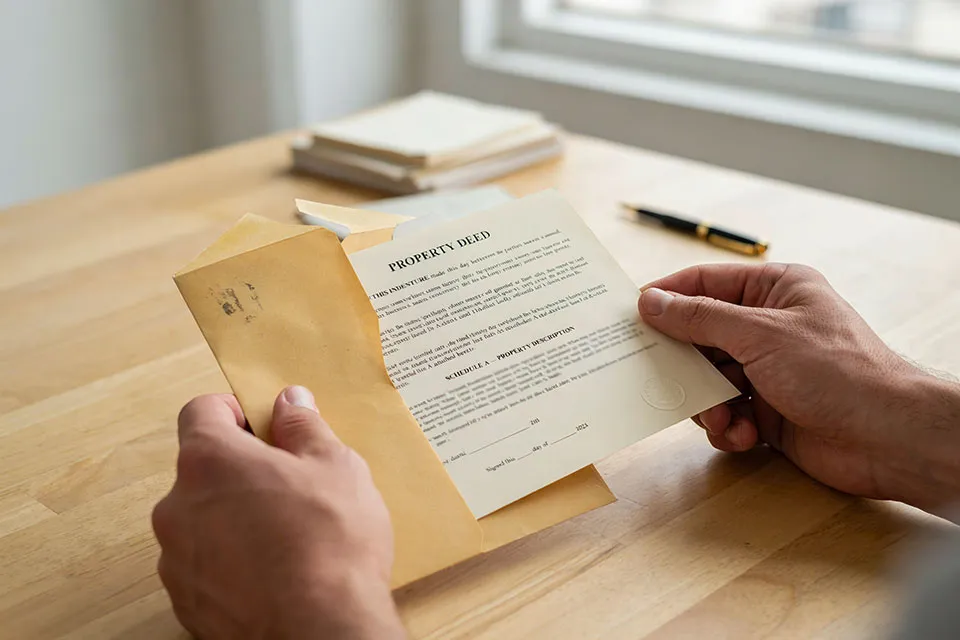
If one of these has landed in your mailbox, you’re not alone. Homeowners across Utah and the rest of the country receive them every year, often right after buying or refinancing. Here’s what these letters really are, and what to do with yours.
What the letter actually is
It’s an advertisement, not a bill and not a government notice. A private company looks up your deed in the county’s public records, then offers to mail you a copy for a fee that is many times what the county charges.
Salt Lake County Recorder Rashelle Hobbs has described these companies as repackaging information from the recorder’s office and reselling it, often to people on fixed incomes. The letters usually aren’t illegal, but they are designed to look official and urgent.
Most important: your ownership does not depend on having a copy of your deed. Once your deed is recorded with the county, it is part of the permanent public record whether or not you have a copy at home.
How to Spot One
These letters vary, but most share a few signs:
- A name that sounds like a government office, such as a “records office” or “deed processing” department
- Words like “official,” “government” or “certified copy” in large type
- A fee of roughly $80 to $95, sometimes laid out like an invoice with a due date
- A warning about federal penalties for tampering with mail, which applies to all mail, not just this letter
- Small print near the bottom saying it is a solicitation and you are under no obligation to pay
That last line is the giveaway. Read the bottom of the page first.
Do you even need a copy?
Most homeowners never do. You received your deed at closing, and when you sell or refinance, the title company pulls the recorded deed from the county for you.
If you do need one, for example for a loan modification or an estate matter, ask first whether a plain copy will work. A certified copy is rarely required.
How to Get a Copy the Right Way
- Contact the Utah County Recorder’s Office, or the recorder in the county where your property is located.
- Give them your name and property address or parcel serial number. The serial number is on your property tax notice.
- Pay the county’s copy fee, which is a few dollars rather than $80 or more.
Or just call us. If you closed with Access Title, we can often help you find your recorded deed quickly.
What to do with the letter
Don’t pay it, and you can throw it away. If you already paid, contact the company and your bank or card issuer about a refund. You can also report the letter to the Utah Division of Consumer Protection.
A copy of your deed doesn’t protect your home. Knowing when something is recorded against it does.
The protection that actually helps
The real risk to homeowners is deed fraud, where someone records a fake deed to sell or borrow against a property they don’t own. A copy of your deed won’t stop that.
What helps is Property Watch, a free service from the Utah County Recorder’s Office. It emails you whenever a deed, lien or other document is recorded on your property, so you hear about a problem right away. Every Utah county now offers a similar service. Sign up at property-watch.utahcounty.gov.
Have a letter you’re unsure about? Send it to our team and we’ll tell you what it is.
Sources
- KUTV: Deed fraud threatens homeowners, Utah counties offer free protection
- Utah County Recorder: Property Watch
- Salt Lake County: Property Watch statewide mandate (SB 165)
- RecordingLaw: Utah property records and deed solicitation mailers
- Minnesota Attorney General: Real estate deed solicitation scams